
RF & mmWave
Cyclic Olefin Thermoset and Vision-Controlled Jetting Spotlight RF Advantages at EUMW2026
Sep 29, 2026
Recent posts


Inkbit’s Scott Twiddy, PhD, will speak at European Microwave Week 2026 about manufacturing complex RF components using Cyclic Olefin Thermoset (COT) materials and Vision-Controlled Jetting™ (VCJ) technology. His presentation, “RF components by Cyclic Olefin Thermoset vision-controlled jetting,” is part of WS01: Additive Manufacturing of Microwave Components and Systems, scheduled for Sunday, 4 October. European Microwave Week takes place 4–9 October at Excel London. Event detail.
For engineers developing advanced antennas and signal systems, the opportunity is practical. Augmentation of your antenna with a bespoke passive dielectric components or systems that provide high gain or increase the field of view, while reducing power, weight, and cost.
Inkbit introduced COT in June 2025 to bring low dielectric loss, thermal stability, and mechanical strength into its additive manufacturing platform. Combined with VCJ, the material enables complex dielectric structures to be produced as monolithic components, including gradient-index lenses that would otherwise require the assembly of separate dielectric layers. COT launch announcement.
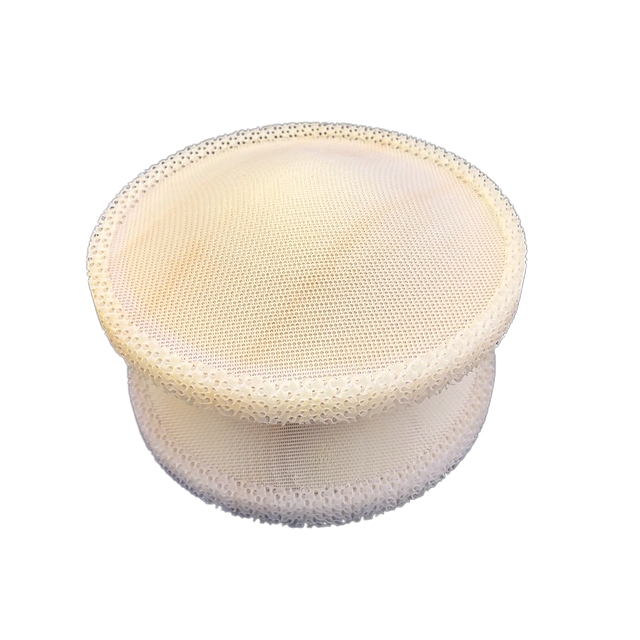
In a GRIN or Luneburg lens, internal geometry helps establish the spatial variation in effective permittivity used to guide electromagnetic waves. Manufacturing that geometry accurately gives engineers a level of control that maximizes the efficiency and performance of these dielectric devices for each specific antenna.
Since COT’s introduction at IMS 2025, Inkbit has demonstrated:
Measured material properties. Inkbit’s COT datasheet reports a dielectric constant of 2.4 and a loss tangent of 0.0018 at 100 GHz. Technical datasheet.
Published lens research. Work with University of Delaware researchers, published in Optical Engineering, demonstrated Luneburg lens operation up to 100 GHz, with realized gains exceeding 34 dBi in the tested configurations. Research overview.
Partner application evidence. Inkbit + Cheshir Industries spotlight documents a GRIN lens application for fully passive, true-time-delay beamforming. Application spotlight.
Together, these developments connect material advancements, manufactured geometry, and measured RF performance. Working as a technical foundation for engineering teams considering low-loss materials such as COT for lens designs and other custom dielectric components.
Twiddy’s EuMW presentation brings this manufacturing approach into a broader technical discussion about additive manufacturing for microwave components and systems.
Engineers attending EuMW can find his presentation in the Sunday WS01 workshop. Teams exploring a new application can also review Inkbit’s lens options, material data, and published application examples by clicking the links above or our RF & mmWave Industry page.




Related News by Inkbit

Partnership

RF & Microwave
Inkbit Demonstrates Luneburg Lenses Operating up to 100 GHz
Published in Optical Engineering (an SPIE journal), the study titled “Fabrication and analysis of electrically large Luneburg lenses using vision-controlled material jetting” documents the successful design, production, and characterization of wideband gradient-index (GRIN) antennas with apertures exceeding 30 wavelengths and realized gains surpassing 34 dBi.
Description

Partnership
Production-Grade TEPU Materials Expand Access to Functional Elastomer Parts
Inkbit today announced that its production-grade TEPU™ 30A & 50A elastomers are now available through Stratasys Direct, expanding access to high-performance, functional elastomer parts for engineering teams moving from prototype to production.
Description